Texas summers put a lot of pressure on an attic. If yours is under-insulated, poorly sealed, or hasn't been touched since the house was built, it shows up as hot upstairs rooms and a system that never seems to catch a break. We inspect first, then recommend what your attic actually needs.
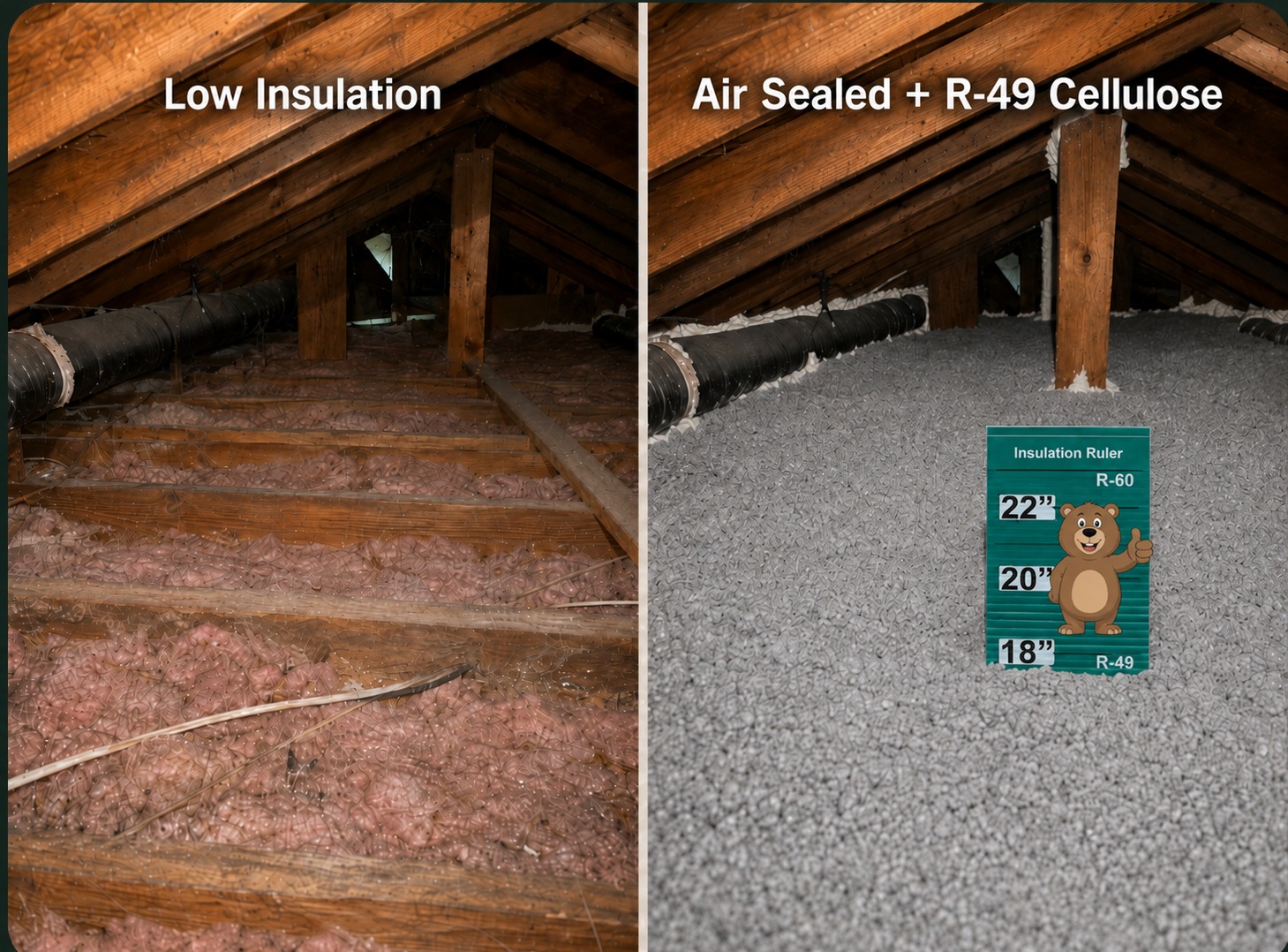
Think of attic insulation as your home's heat bouncer. Its whole job is slowing down heat moving between a scorching Texas attic and the rooms below it — mainly keeping summer heat from radiating straight down into your living space so your AC isn't stuck fighting a battle it can't win. But depth alone doesn't cut it. How evenly that attic insulation is spread, and whether air is sneaking around it through gaps and leaks, matters just as much. That's why a real inspection looks at the whole attic — insulation, air sealing, and ventilation together — not just how deep it is in one spot.
R-value is the number every insulation bag loves to brag about — it measures how well a material resists heat flow, so higher means better resistance. Handy, but not the whole story: even a high R-value attic can underperform if there are thin spots, compressed insulation, or air leaks working against it. That's why we measure your attic's actual coverage during a free inspection instead of estimating from a chart.
Loose-fill insulation blown evenly across the attic floor — the most common way to bring an under-insulated attic up to an appropriate level.
For attics with insulation that's mostly fine but thin or uneven in places — we add material where it's actually needed instead of starting over.
For attics with contaminated, water-damaged, or badly deteriorated insulation — removed, the attic prepped, and new insulation installed.
Gaps around plumbing stacks, wiring penetrations, and the attic hatch let conditioned air leak out and hot attic air leak in — no amount of insulation fully makes up for it. We seal what we find during inspection.
Learn more about air sealingA well-ventilated attic moves hot air out instead of letting it build up, which matters for comfort below and for the roof deck itself. We evaluate intake and exhaust ventilation as part of every attic inspection.
Learn more about ventilationBook your free inspection online or by phone.
We measure depth, check coverage, and look for air leaks and ventilation issues.
Photos and a plain-language summary of what we found — good or bad.
If insulation would help, we'll say so. If it wouldn't, we'll say that too.
Flexible financing options may be available for qualifying attic insulation and home-improvement projects, so cost doesn't have to be the reason an attic goes unaddressed.
The clearest way is a free inspection — we measure your existing depth and coverage rather than guess. Hot upstairs rooms, visible bare spots, and an attic that's never been touched are all common signs worth checking out.
No. If your attic checks out fine, we'll tell you that in writing instead of finding a reason to sell you something.
A top-off adds material to insulation that's still in reasonably good condition. A full removal and replacement is for insulation that's contaminated, water-damaged, or too deteriorated to build on top of.
Both. Financing options may be available for attic insulation and performance work, not just roof repairs and replacements.
Both — this page covers our core attic insulation coverage across San Antonio, New Braunfels, and the surrounding Texas Hill Country.
Free inspection, no obligation, financing available if you need it.
Request an Attic Inspection