Know What You Need. Know What It Costs. Know What You're Getting.
Bearmark replaces roofs that are genuinely worn out — aging, leaking, storm-damaged, or past the point a repair can reasonably fix. We start with an inspection, not an assumption. If a repair still makes sense for your roof, that's what we'll recommend.
Not every leak or missing shingle means the whole roof is done. Some problems are contained and fixable. Others are a sign the roofing system itself has reached the end of its useful life. The difference usually comes down to how widespread the damage is and what condition the decking underneath is in.
If repairing the roof makes more financial sense, we'll tell you that. Read more about our roof repair options.
There's no single number that applies to every roof. Two homes of similar size can cost noticeably different amounts to re-roof once you account for pitch, material, and what the crew finds once the old roofing comes off. Here's what actually moves the price.
Our online calculator gives you a starting estimate based on your home's size and roof type. An in-person inspection is what turns that estimate into an exact scope of work.
Estimate Your Roof CostShingles are the part you see. Most of what keeps water out is underneath them. Here's what goes into a complete roofing system, layer by layer.
The plywood or OSB base every other layer attaches to. If it's soft, delaminated, or rotten, it gets replaced before anything else goes down.
A self-adhering barrier installed at eaves, valleys, and other vulnerable spots where water is most likely to find a way in.
A water-resistant layer across the rest of the deck, providing a secondary barrier beneath the shingles.
Metal flashing along the eaves and rakes that directs water into the gutters instead of behind the fascia.
A dedicated starter strip along the edges that gives the first row of field shingles a sealed, secure edge to bond to.
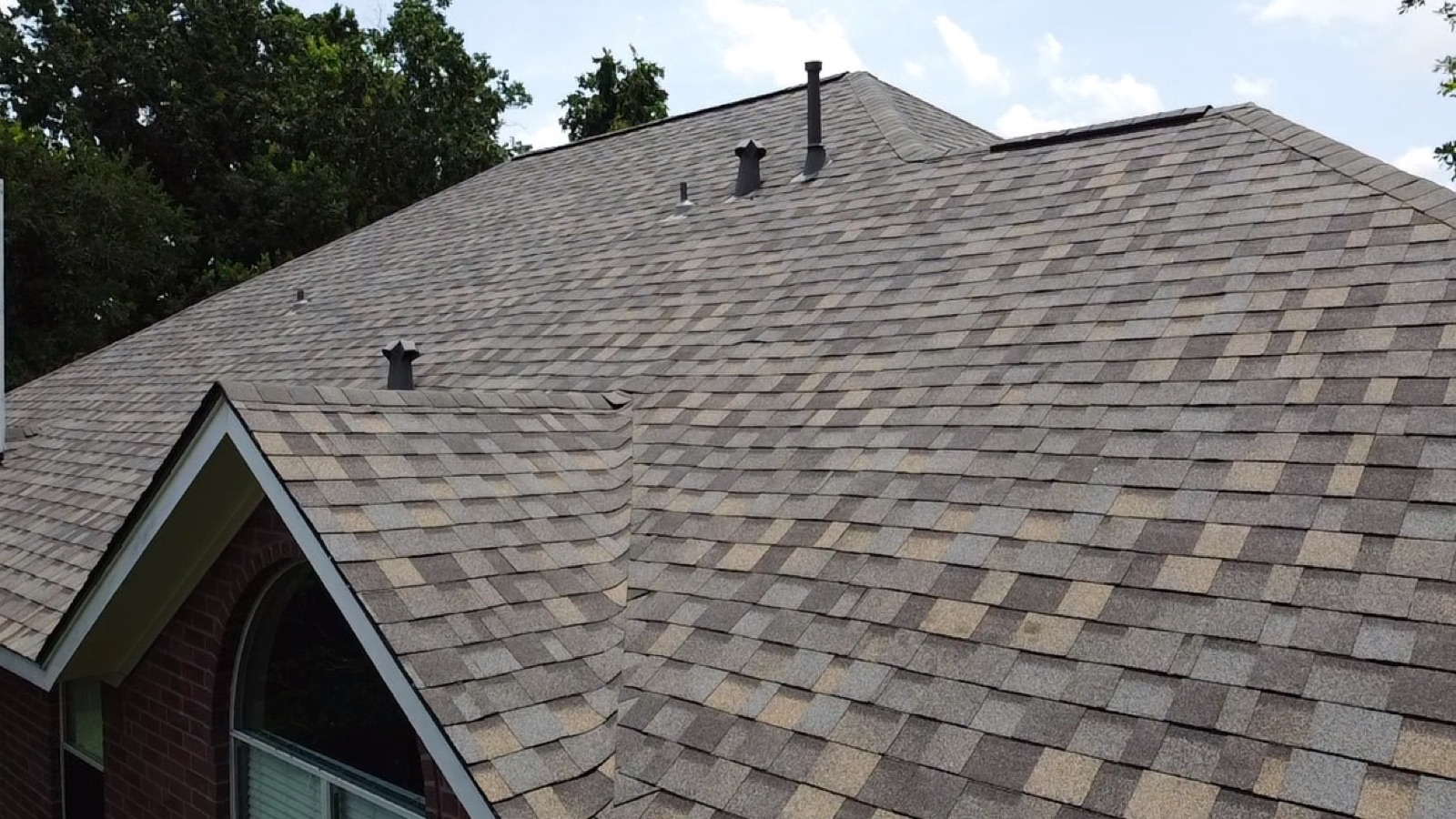
The main roofing material covering the majority of the roof — the layer most people mean when they say "shingles."
Shingles designed specifically for the roof's peaks and hips, where two planes meet and wind exposure is highest.
Boots and flashing around plumbing vents, exhaust fans, and other places where something passes through the roof.
Reinforced material where two roof slopes meet, since valleys carry more concentrated water runoff than any other part of the roof.
Intake and exhaust that let the attic breathe, which affects how long the roof above it actually lasts.
Every Bearmark proposal spells out what's included in your roof system, layer by layer, so you know exactly what you're paying for.
A lower number on paper doesn't automatically mean a worse roof, and it doesn't automatically mean a dishonest contractor either. It usually means the two quotes aren't scoped the same way. Before comparing price, compare what's actually included.
The most common re-roofing choice for a reason — affordable, widely available in a range of colors and profiles, and straightforward to repair if something ever needs attention down the road. Actual lifespan varies with the specific product, installation, and how the roof is maintained.
Rated Class 3 or Class 4 under UL 2218 impact testing, these shingles are built to resist cracking and bruising better than standard asphalt. Class 4 is the highest rating available. No shingle is hail-proof — the rating reflects resistance, not immunity.
A durable, low-maintenance system with a longer service life than asphalt and strong wind performance. It costs more upfront, which is typically offset by fewer replacements over the time a homeowner keeps the house.
A distinctive look with real durability, but tile is heavy — the structure needs to be able to support it, which isn't the case on every home. Where it fits, it holds up well and ages differently than shingle or metal roofing.
Financing available on every tier — ask about options.
Some roofers use smooth shank nails because they're cheaper. They also work loose and back out over time, especially in Texas wind. Every roof we install uses hurricane ring shank nails with 300% more withdrawal resistance than smooth shank — on every tier, not just the top one.
Hail bruises a shingle's mat without always tearing the surface, so damage isn't always obvious from the ground. Impact-rated shingles resist this better, but rating means resistance, not immunity. Worth an inspection after any significant storm — see our storm damage process.
Months of direct sun age asphalt shingles faster than milder climates do, and a hot attic compounds the effect from underneath. Material choice and attic ventilation both factor into how a roof holds up over years of Texas summers.
Most wind failures start at the edges — a starter strip that wasn't sealed properly, fasteners that missed the nailing zone, flashing that wasn't secured. Installation quality matters as much as the wind rating printed on the shingle wrapper.
Valleys, penetrations, and flashing carry the load during a hard rain — that's where water concentrates and where a poorly installed roof leaks first. Proper underlayment and drainage matter more here than the field shingles themselves.
An attic that can't vent properly runs hotter, and that heat works against the roofing material above it and the insulation below it. Ventilation isn't a cosmetic add-on — it's part of how long a roof actually lasts.
Replacing shingles without checking attic ventilation can miss half the picture. Blocked soffit intake, inadequate exhaust, or under-insulated attic floors all affect how the new roof performs, independent of how well the shingles themselves are installed.
Bearmark works in both roofing and attic performance, so when we're up on your roof we're also looking at intake and exhaust ventilation, signs of heat buildup, and moisture in the attic — not just the roofing material.
We won't tell you insulation adds a specific number of years to a roof's life. What we will say is that a roof and the attic underneath it work as one system, and it's worth having both looked at together.
Related: attic ventilation, attic insulation, and radiant barrier options.
Timing depends on roof size, complexity, material, weather, and whether decking needs to be replaced along the way. We'll give you a realistic window once we've seen the roof, not a one-size-fits-all promise.
We document condition, take measurements, and check penetrations, flashing, ventilation, and visible damage.
Repair, replacement, or continued monitoring, based on what the inspection actually shows.
We spell out included work, materials, upgrades, exclusions, and any decking allowance up front.
You choose the roof system, color, upgrades, and ventilation approach that fits the home and budget.
Landscaping, driveway, HVAC equipment, windows, and siding get protected before work starts.
Existing roofing materials come off and the deck underneath gets inspected before anything new goes down.
Any damaged decking found gets addressed with your authorization, and the surface is prepped for the new system.
Underlayment, flashing, starter, roofing material, ridge components, and ventilation go in, in that order.
Debris removal followed by a magnetic nail sweep of the yard and driveway.
A quality-control pass, final documentation, and a homeowner walkthrough where applicable.
We're building out a gallery of recent Bearmark roof replacements across San Antonio, Austin, and Houston. Ask us during your inspection and we're glad to show recent work in your area.
Qualifying roofing products carry a manufacturer material warranty against defects, with coverage length depending on the roof system and manufacturer selected — up to 50 years on our Platinum and Diamond tiers. Exact terms are set by the manufacturer, not by us.
Our labor warranty covers our installation work — if something we installed fails or leaks within the labor warranty period for your tier, we come back and fix it at no charge. Length varies by roof system, from 3 years up to 10 years on our top tiers.
We'll show you what's covered before you sign. Full terms by tier are on our warranty page.
A full roof replacement is a real expense, and financing can make the timing easier without forcing a decision before you're ready. Plans and terms depend on qualification — we'll walk through the actual options with you once we know the scope of the project.
You don't need to decide on financing before the inspection. The free inspection and honest recommendation come first.
See Financing OptionsBearmark replaces roofs across San Antonio, Austin, Houston, and the surrounding Texas Hill Country. Choose your area for local information and scheduling.
It depends on roof size, pitch, material, number of stories, and what the crew finds once the old roofing comes off. Our online calculator gives you a starting estimate; a free inspection turns that into an exact scope and price.
An inspection is the honest way to answer this. Isolated, contained damage is often repairable. Widespread deterioration, repeated leaks in different spots, or decking problems usually point toward replacement. We'll tell you which one applies to your roof.
Most residential re-roofs take one to a few days of active work, but total timeline depends on size, complexity, material, weather, and whether decking repairs are needed. We'll give you a realistic window before work starts, not a generic promise.
Yes. It's noisy and there's activity overhead and around the property, but you don't need to leave the house. We protect landscaping, the driveway, and anything near the work area, and do a magnetic nail sweep when we're done.
Yes. A full tear-off removes the existing roofing material down to the deck so it can be inspected properly, rather than installing new shingles over old ones.
We show you what we found, explain what replacing it involves, and get your authorization before doing the work. Decking replacement is priced separately from the base roofing job since it isn't always needed.
There isn't one universal answer. Architectural asphalt shingles are the most common and affordable option. Impact-resistant shingles make sense in hail-prone areas. Metal and tile are longer-term, higher-upfront-cost options with their own tradeoffs. What fits depends on your home, budget, and priorities.
In hail-prone parts of Texas, often yes — they resist cracking and bruising better than standard shingles and may qualify for an insurance discount depending on your carrier. They cost more upfront and aren't hail-proof, just more resistant.
Both ratings come from UL 2218 impact testing, which drops steel balls onto a shingle sample to check for cracking. Class 4 is the highest rating available and represents the greatest resistance to impact damage; Class 3 is one step below it.
It depends on your policy, the cause of the damage, your roof's condition and age, your deductible, and any exclusions in your specific policy. Coverage decisions are made by your insurance carrier, not by us — we can document damage, but we don't determine what a claim pays.
Yes, if the damage is widespread enough across the roof. Isolated hail hits are often repairable. A pattern of impact damage across most of the roof, especially combined with an older roof, is more likely to warrant full replacement.
Flashing at chimneys, walls, and other transitions is inspected during tear-off. Reusable flashing in good condition may stay; damaged, rusted, or undersized flashing gets replaced as part of the job.
Poor ventilation lets heat and moisture build up in the attic, which works against both the roofing material above and the insulation below. We check intake and exhaust ventilation as part of a replacement, not as a separate add-on sale.
Look past the total price to what's actually included — exact shingle product, underlayment, starter, ridge cap, flashing, how decking is priced, disposal, cleanup, and warranty terms. Two quotes with different scopes aren't really comparable on price alone.
Two separate warranties apply: a manufacturer material warranty on the roofing product itself, and our workmanship warranty covering installation. Terms vary by roof system tier — full details are on our warranty page.
Start with an inspection. We'll show you what we find and explain your options.