Find Out What Your Roof Actually Needs.
We check the roof surface, flashing, penetrations, ventilation, and drainage, and — when it's safely accessible — the attic underneath. Then we tell you what we found in plain language. Most inspections don't end with "you need a new roof." A lot of the time it's monitor, maintain, or a repair.
There's no single rule that fits every roof or every homeowner. These are the situations that most often bring someone to us.
Impact isn't always visible from the ground. We climb up, look close, and tell you exactly what we find — real damage or none at all.
We check for lifted, creased, missing, or loosened components — the kind of damage that gets worse with the next storm if nobody catches it.
We trace the water back to where it's actually entering, instead of guessing based on where the ceiling stain happens to be.
A general home inspector can flag a roofing concern. We can tell you what it actually needs and roughly what that costs.
Find out what a buyer's inspector is going to find before they do, so it's your call how to handle it, not a negotiation surprise.
Age alone doesn't tell you the condition. We'll tell you what shape it's actually in instead of going by the calendar.
We'll give you the honest math — whether another patch still makes sense, or whether you're just paying to delay a replacement.
Get the roof's actual condition from us before you commit to a repair or replacement anywhere, not after.
See your situation up there? That's exactly what the inspection is for.
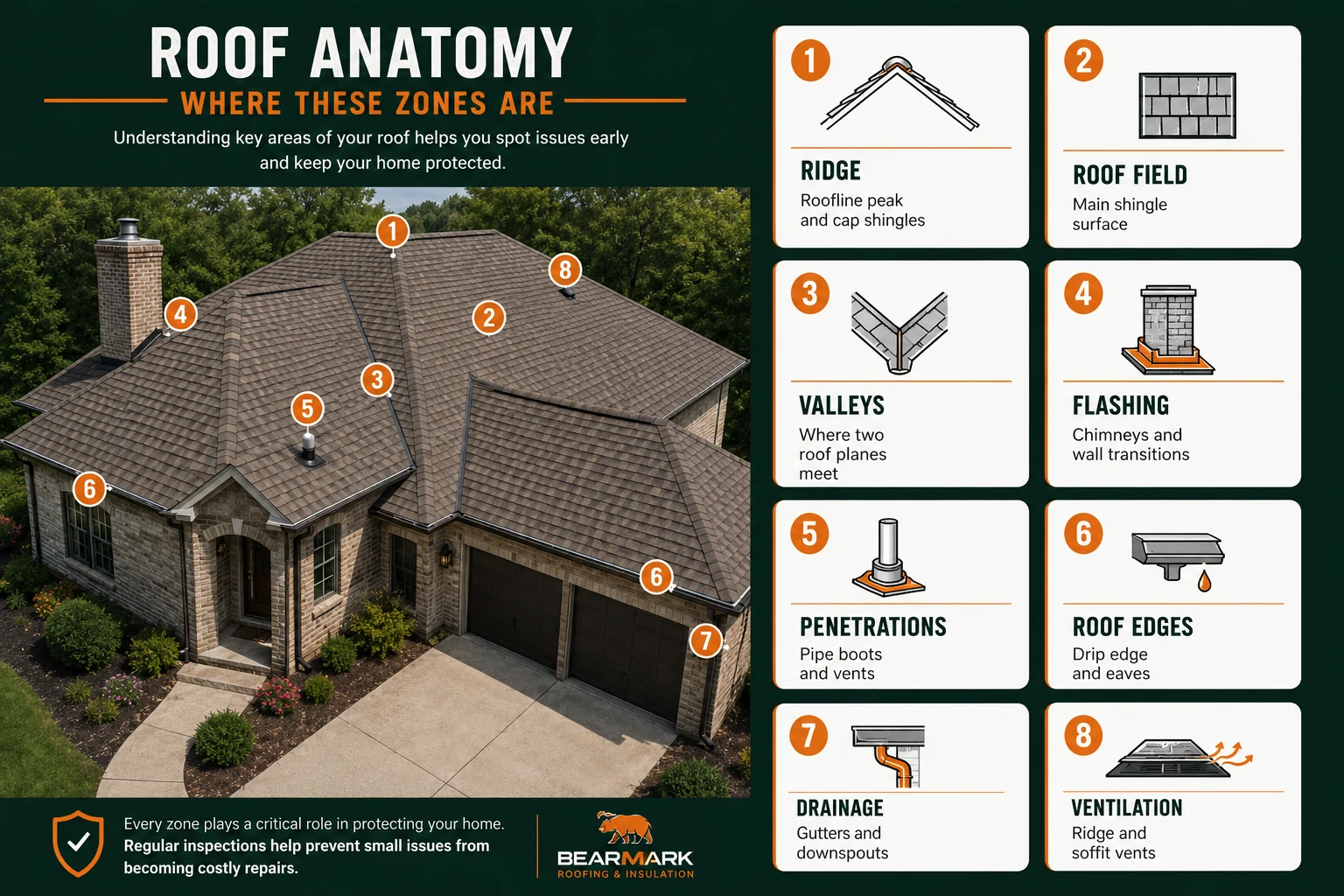
Schedule a Free Roof InspectionA roof is a set of systems working together, not just a layer of shingles. We go through it system by system.
A little granule loss in the gutter is normal wear, not automatic failure.
Cracked or shrunken pipe boots are one of the more common leak sources we find.
We note visible drainage conditions — not a full gutter system evaluation.
This is where a lot of roof inspections stop looking. We don't.
When the attic is safely accessible and part of the inspection scope.
You'll see photos of anything we flag, not just take our word for it, along with where it is on the roof. Every finding is sorted into one of five levels below, so a little granule loss doesn't read the same as a deteriorated pipe boot — and then we tell you the next step.
No immediate action based on visible conditions. We'll give you a reasonable timeframe for when the area should be checked again.
A small issue now could become a larger problem later — such as resealing a pipe boot or replacing damaged ridge cap.
A localized repair should be considered. We'll explain what needs attention, where it is, and what the repair involves.
Something deserves a closer look — additional attic access, another visit, or input beyond what can be confirmed visually.
Condition may justify discussing full replacement. We'll explain what we're seeing and your options, without pressure.
Not every inspection ends with a repair recommendation. The goal is to give you enough information to make the right decision for your home.
The goal of the inspection is to understand the roof's condition. Replacement is only one possible outcome, and usually not the first one we land on.
No action needed right now
Check again down the road
A small fix now prevents a bigger one
Fix the affected area
Needs a closer look before we recommend anything
Condition justifies a full roof system
See what each path looks like in practice: Roof Repair or Roof Replacement.
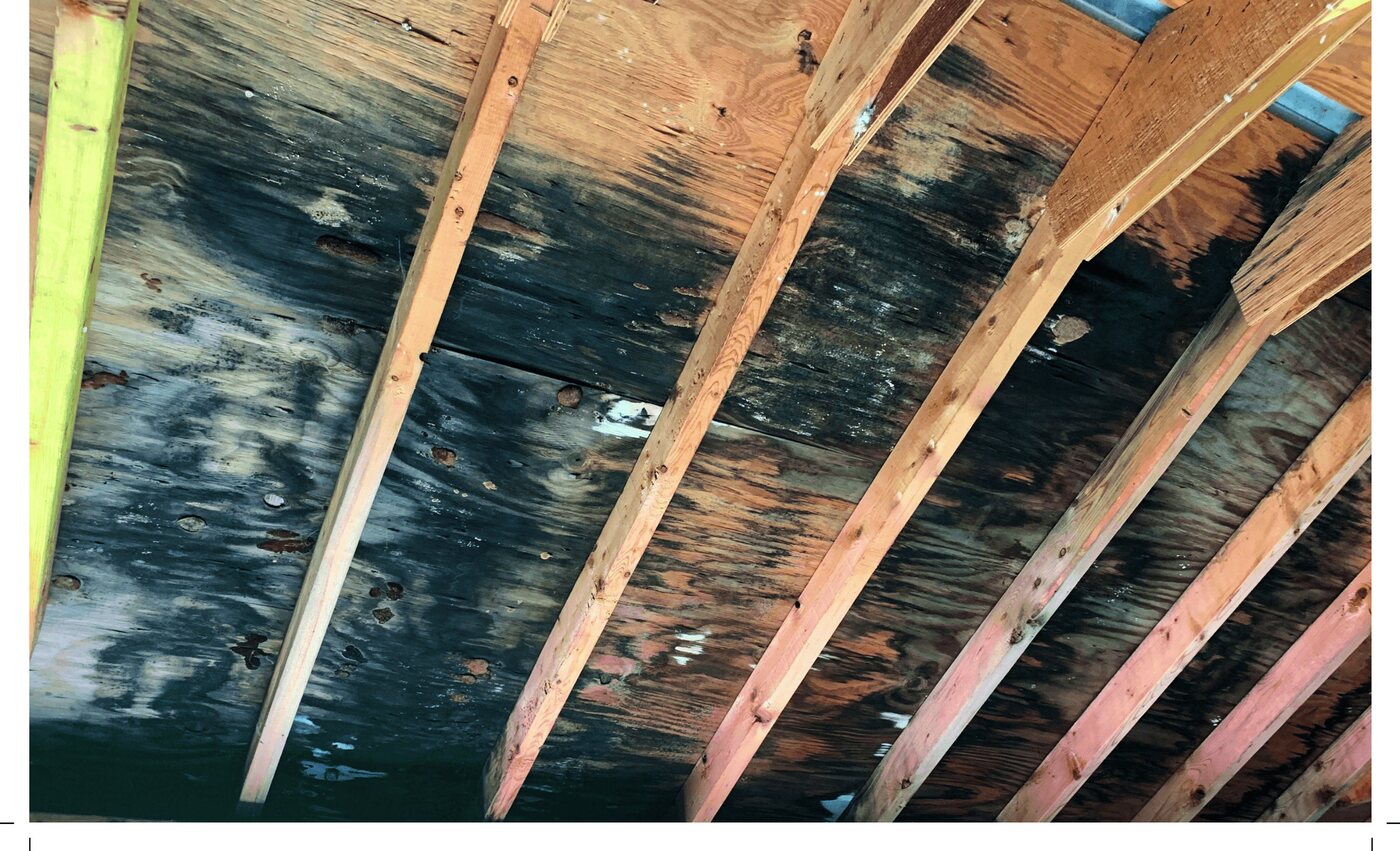
Water doesn't fall straight down once it gets under the roofing. It travels along the decking, follows a rafter, runs down a pipe, and shows up on the ceiling somewhere other than where it came in.
We check the places leaks typically start — pipe boots, flashing, valleys, roof-to-wall transitions, other penetrations, and any damaged or missing shingles nearby — and try to trace the path back to the source.
Some leaks are intermittent. If it's been dry for a while when we're there, we may not be able to reproduce or pinpoint it on the first visit, and we'll tell you that instead of guessing. If a repair is the answer, here's our roof repair process.
Different storm events leave different marks. We're looking for the specific signs each one tends to leave behind, not just "damage" in general.
Impact marks, bruising, granule displacement, dented soft metals like vents and flashing, and cracked components.
Missing or lifted shingles, creases, damaged edges, displaced ridge cap, and flashing that's worked loose.
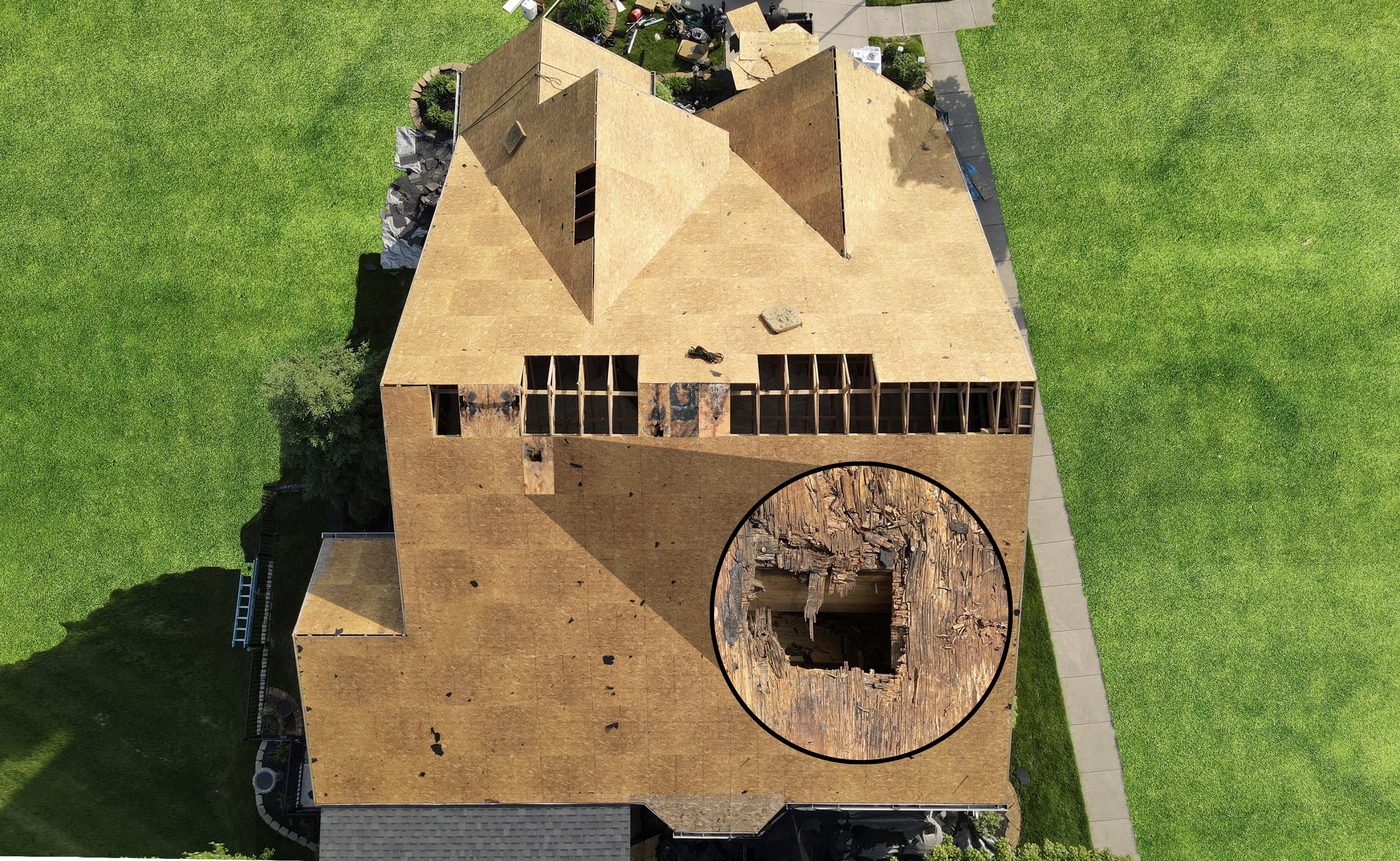
Punctures, cracked material, and damaged flashing — sometimes a structural concern that needs further evaluation.
We check the vulnerable transitions and penetrations where wind-driven rain finds a way in that a normal rain wouldn't.
We document what we find. Whether it adds up to an insurance claim is a different question — see the next section.
We get asked about this a lot, so we'd rather be direct about it.
We don't determine coverage, and we're not going to tell you that you should file a claim just because we found damage. That call is between you and your policy.
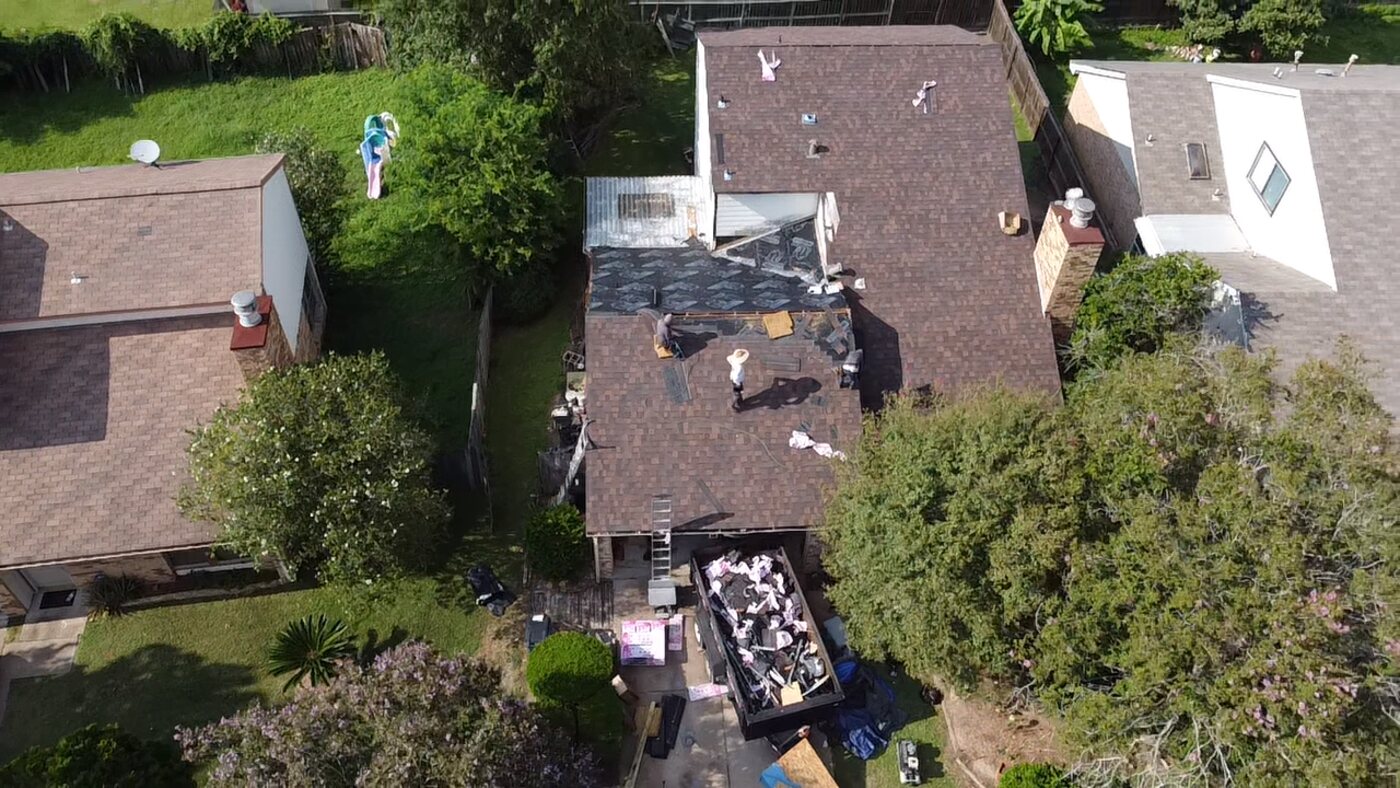
On some jobs — steep roofs, or areas that are hard to safely access on foot — we use a drone to get a full overview and document conditions from angles a ladder doesn't reach.
It's a documentation tool, not a substitute for a close, hands-on look where that's what the situation calls for. Overview photos and roof geometry are what a drone is good for; the flashing detail and penetration work still happen up close.
Because Bearmark works in both roofing and attic performance, an inspection can pick up on things that a roofing-only crew might not think to check.
Blocked soffit intake, inadequate exhaust ventilation, attic heat buildup, thin or uneven insulation, condensation signs — these affect the roof's performance even when the shingles themselves look fine.
Related: attic ventilation, attic insulation, blown-in insulation, and radiant barrier options.
You want to know where the roof stands overall — no specific problem, just real information.

Active or suspected water intrusion, and you need to know where it's actually coming from.

Hail, wind, or falling debris, and you want the roof checked and documented.

A localized problem you've noticed, and you want to know what it'll take to fix it.

You're trying to figure out whether another repair still makes sense, or whether it's time to talk replacement.

You want roofing-specific detail to go along with a real estate transaction, ahead of or alongside a general home inspection.
These get lumped together, but they're not the same service, and one doesn't replace the other.
We don't replace a licensed home inspector, and a home inspection doesn't replace a roofing-specific look. They answer different questions.
Most residential inspections take about an hour on site, longer for a bigger or more complex roof.
Leak, storm, an aging roof, a home sale, or just wanting to know where things stand.
We walk the roofing surface, edges, ridges, valleys, flashing, penetrations, and visible drainage.
If it's safely accessible and part of the scope, we check the underside for moisture, decking condition, and ventilation.
We photograph what we find so you're seeing the actual conditions, not just hearing about them.
We walk you through what we found in plain language, on site or shortly after.
Monitor, maintenance, repair, further evaluation, or replacement — whichever one actually applies.
A roof inspection is genuinely useful, but it isn't magic. Here's what a standard visual inspection is, and isn't.
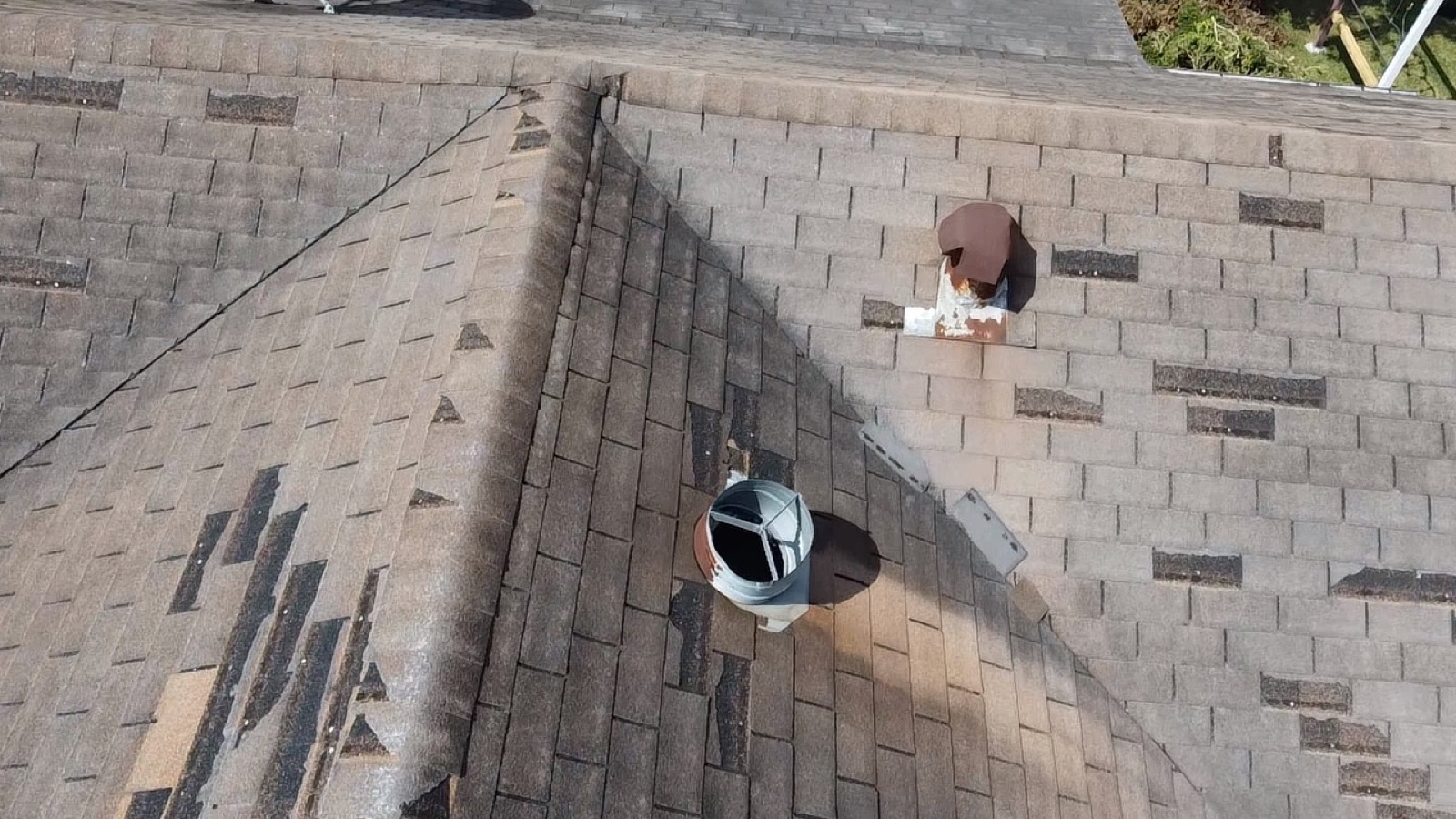
What we're looking at: A vent flashing with a corroded, pulled-back seal.
Why it matters: A worn seal like this lets water track in around the penetration, especially in wind-driven rain.
Typical next step: Often a straightforward repair if the surrounding shingles are still sound.
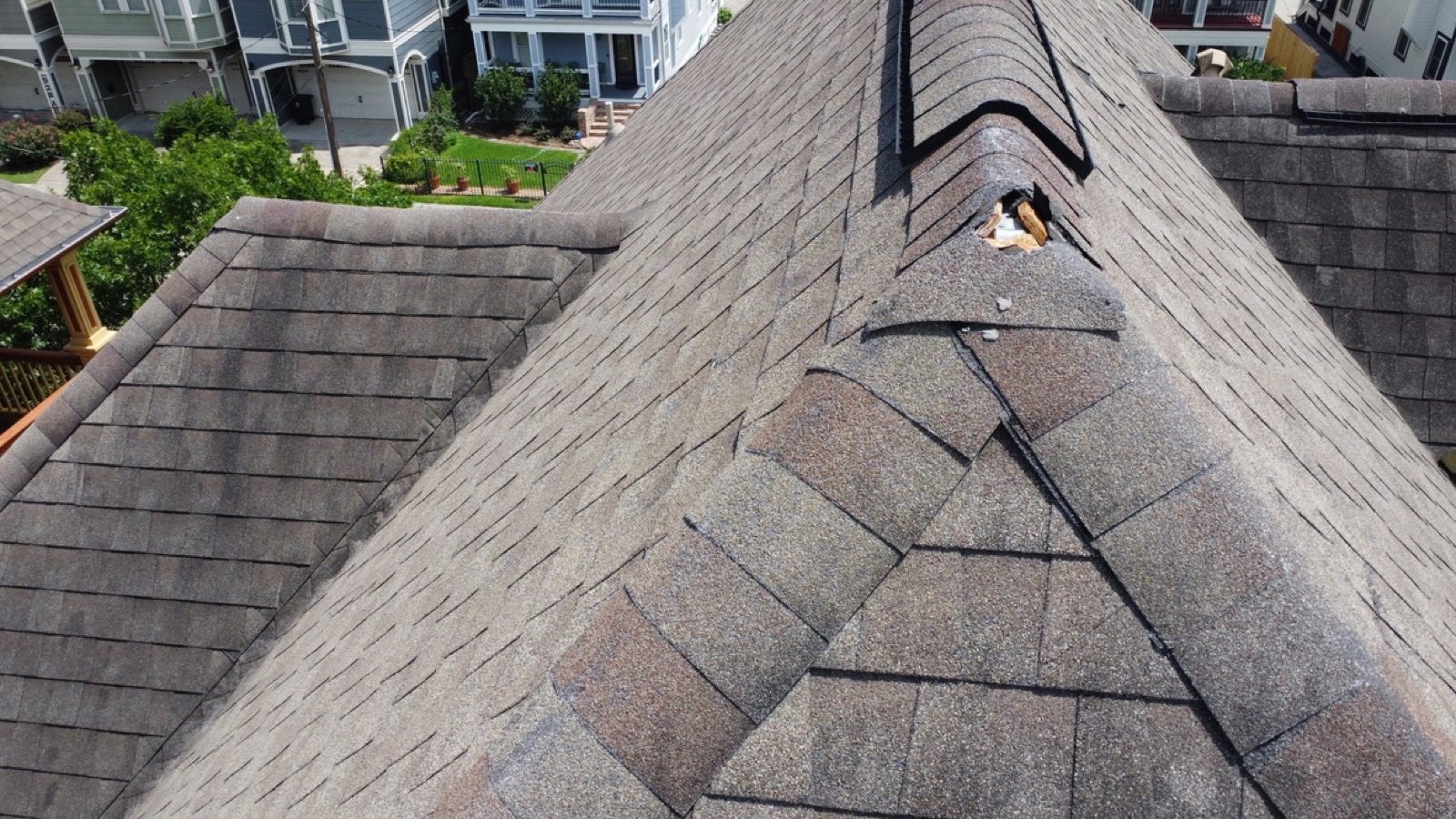
What we're looking at: A ridge cap shingle torn loose, with underlayment exposed underneath.
Why it matters: The ridge takes the most wind exposure on the roof. Once it's open, water has a direct path in.
Typical next step: Localized ridge repair, unless the same wear shows up elsewhere on the roof.
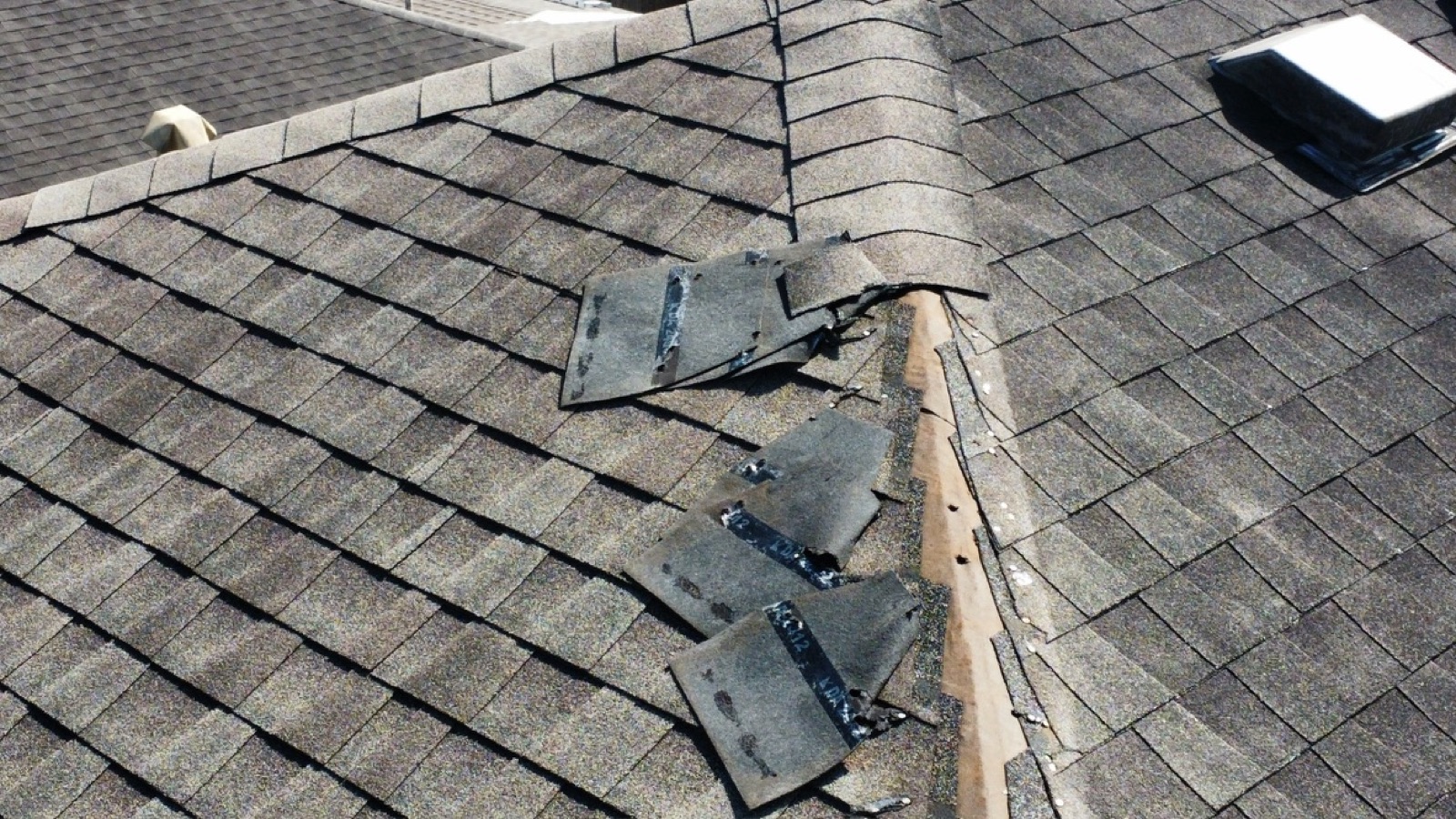
What we're looking at: Shingles lifted and torn loose near a ridge line.
Why it matters: Wind gets under a broken seal and keeps working the shingle loose until it's gone.
Typical next step: Depends how widespread it is — one section can often be repaired; scattered damage points toward replacement.
Standard residential roof inspections are free. There's no charge for us to come out, walk the roof, and tell you what we found — whether that's "you're fine for now" or a specific list of what needs attention. Financing is available separately if repair or replacement work follows — see financing options.
Time on the roof depends on size, height, pitch, complexity, and how much attic access is involved — a straightforward single-story roof goes faster than a steep, cut-up roof with several valleys. Most residential inspections run about an hour on site.
Bearmark inspects roofs across San Antonio, Austin, Houston, and the surrounding Texas Hill Country. Choose your area for local information and scheduling.
We look at the roofing surface, ridges, valleys, flashing, penetrations like pipe boots and vents, the edges, visible drainage, and ventilation. When the attic is safely accessible, we check the underside for moisture, decking condition, and insulation.
Standard residential inspections are free. You get a look at the roof and an honest answer, whether or not you end up doing any work with us.
Yes, for standard residential roofs. There's no charge to have us come out, walk the roof, and tell you what we found.
Usually about an hour on site, depending on the size, pitch, and complexity of the roof, and how much attic access is involved.
There's no single rule that fits every roof. Many homeowners have one done after severe weather, before buying or selling, once the roof starts getting older, or simply because it's been a while and they want to know where things stand.
It's a reasonable call, especially after a storm large enough to make the local news. Hail damage isn't always visible from the ground, and catching it early matters for the roof itself and for any insurance timeline you're working with.
We can identify visible signs — bruising, granule displacement, cracked or dented soft metals like vents and flashing. Whether that damage is significant enough to warrant a claim is a separate question, and one your insurance carrier ultimately decides.
Often, yes — we check the areas most likely to be the source, like flashing, valleys, and penetrations. Some leaks are intermittent, though. If the roof is dry the day we're there, we may not pinpoint the exact entry point on the first visit.
When it's safely accessible and part of the scope, yes. We look for moisture staining, active or past leaks, decking condition, and ventilation issues from the underside.
On some jobs, yes — mainly steep roofs or areas that are harder to safely access on foot. It's a tool we use for documentation and overview photos, not a replacement for a close, hands-on look where that's needed.
Not necessarily. Plenty of inspections turn up nothing urgent. That's a legitimate outcome, not a wasted trip — it tells you where the roof stands and gives you a timeframe for checking again.
We show you what we found, explain what it means, and tell you where it falls — something to monitor, a small maintenance item, a repair, or in some cases a reason for a closer look. We don't skip straight to "you need a new roof."
No. An inspection documents the roof's condition. Whether to file a claim, and whether that claim gets approved, is between you and your insurance carrier based on your policy.
A general home inspector looks at a wide range of systems across the whole property, usually from the ground or a ladder, and roofing is one section of a much longer report. A roofing-specific inspection is more focused — we're up on the roof looking closely at the components that matter for roofing decisions.
It can be useful alongside your general home inspection, especially if the home inspector flags a roofing concern or you want more detail before making an offer contingent on the roof's condition.
Isolated, contained damage on an otherwise sound roof is often repairable. Widespread wear, repeated leaks in different spots, or decking problems usually point toward replacement. An inspection is how you find out which situation you're actually in.
We'll inspect the roof, show you what we find, and explain the next step. Sometimes that's a repair. Sometimes it's replacement. Sometimes it's nothing right now.